Does the thought of a dark kitchen make you nervous? I get it—we’ve been told for years that white, bright, and airy is the only way to go.
But get ready for a little shock: stepping into the dark side can actually make your home feel more intimate and grounding than you ever imagined. If you’re craving a space that feels like a warm hug rather than a sterile laboratory, these moody kitchen ideas are going to change the way you see the heart of your home.
1. Drench Your Cabinetry in Deep Colors
Let’s start with the most impactful change you can make. Forget safe grays and timid blues; we’re talking about fully committing to depth. Imagine cabinetry painted in a profound forest green, a midnight navy that borders on black, or even a rich eggplant.

When you saturate your cabinets in these darker hues, they stop being just storage and start acting like architectural features.
The trick here is confidence—let the color do the heavy lifting. It instantly grounds the room and creates a sophisticated backdrop that makes everything else, from your morning coffee mug to your dinner plates, pop in contrast.
2. Swap Chrome for Aged Brass or Copper
If you’re going dark, you need a little glint to catch the eye.
Think of this like jewelry for your kitchen. Shiny chrome can feel too cold and modern against a moody palette, clashing rather than complementing. Instead, reach for unlacquered brass, antique bronze, or warm copper hardware.
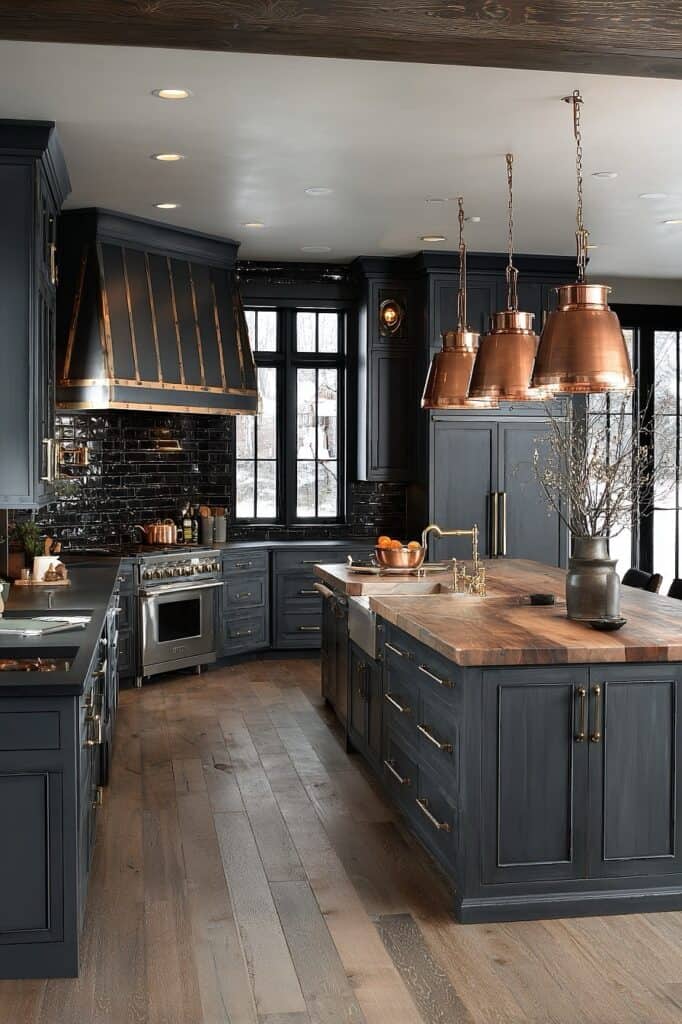
These metals have a living finish that patinas over time, adding a layer of history and warmth that is absolutely essential in a dark space. The glow of a brass faucet against a charcoal backsplash? It’s pure magic.
3. Incorporate Stone with Drama and Veining
We aren’t looking for subtle, whisper-quiet countertops here. A moody kitchen demands texture and movement. Look for natural stones—like soapstone, black granite, or heavily veined marble—that carry a sense of visual weight.
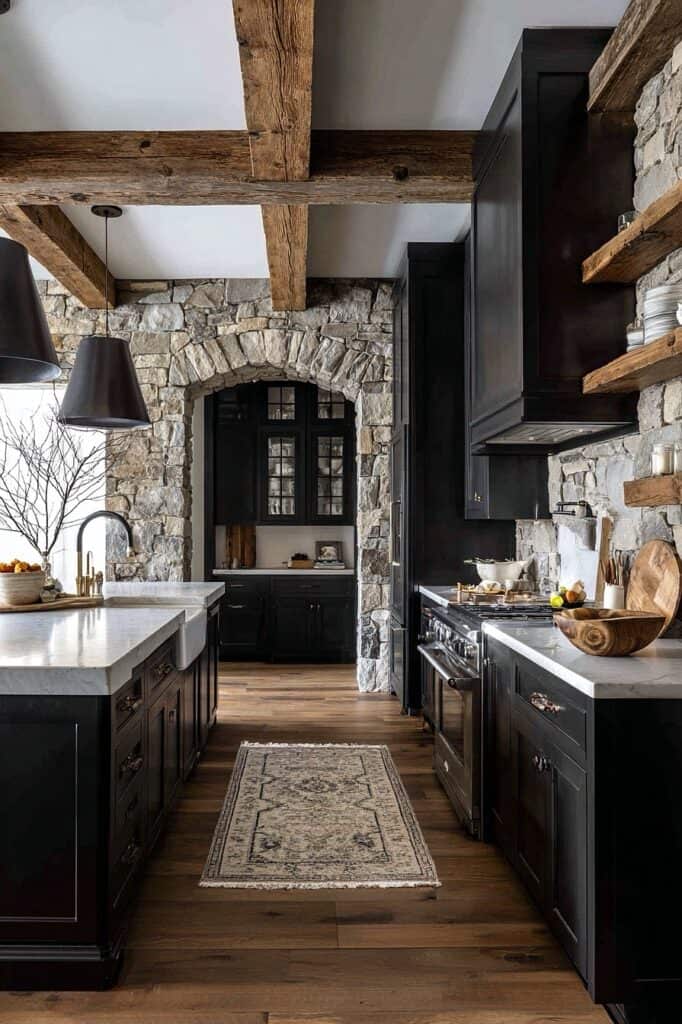
I love the look of a honing finish (matte) rather than a high gloss; it feels softer to the touch and absorbs light rather than reflecting it harshly. A countertop with dramatic, storm-cloud veining acts as art on a horizontal surface, bridging the gap between luxury and rugged, natural beauty.
4. Create Shadows with Lower Lighting
Lighting in a moody kitchen isn’t about illuminating every corner with stadium-bright LEDs. It’s about cultivating atmosphere. You want to create pools of light that draw people in. Think about wall sconces with metal shades that direct light downward, or pendant lights with smoked glass.
By lowering the overall light level and focusing on warm, ambient glows, you enhance the cozy, cavernous feel of the dark colors. It’s less about seeing every crumb on the floor and more about setting a vibe that says, “Sit down, stay awhile, have a glass of wine.”
5. Add Warmth with Dark Stained Woods
To keep a dark kitchen from feeling cold or stark, you need organic elements. But instead of light oak or blonde pine, lean into the richness of walnut or mahogany tones.

Whether it’s a butcher block island, exposed ceiling beams, or open shelving, dark stained wood brings a natural complexity to the palette. It adds grain and texture that solid paint colors can’t provide. This layer of wood ensures the space feels “livable” and rooted in nature, rather than like a sleek, untouchable showroom.
6. Display Vintage Art and Rugs
This is where your personality really gets to shine. A moody kitchen is the perfect gallery for vintage oil paintings, moody landscapes, or charcoal sketches.
Dark walls make art sing in a way that white walls simply can’t. Pair this with a vintage runner rug on the floor—something with deep reds, rusts, or browns—and suddenly the kitchen feels like a curated room in an old library.
These soft, storied elements break up the hard surfaces and remind everyone that this is a room for living, not just cooking.
7. Mix in Texture with Ceramics and Glass
When you reduce the amount of light and bright color, texture becomes your best friend. Without it, a dark room can look flat.
Introduce handmade ceramics with imperfect glazes, ribbed glass cabinet fronts, or woven seagrass bowls. These elements catch the light differently and invite touch.
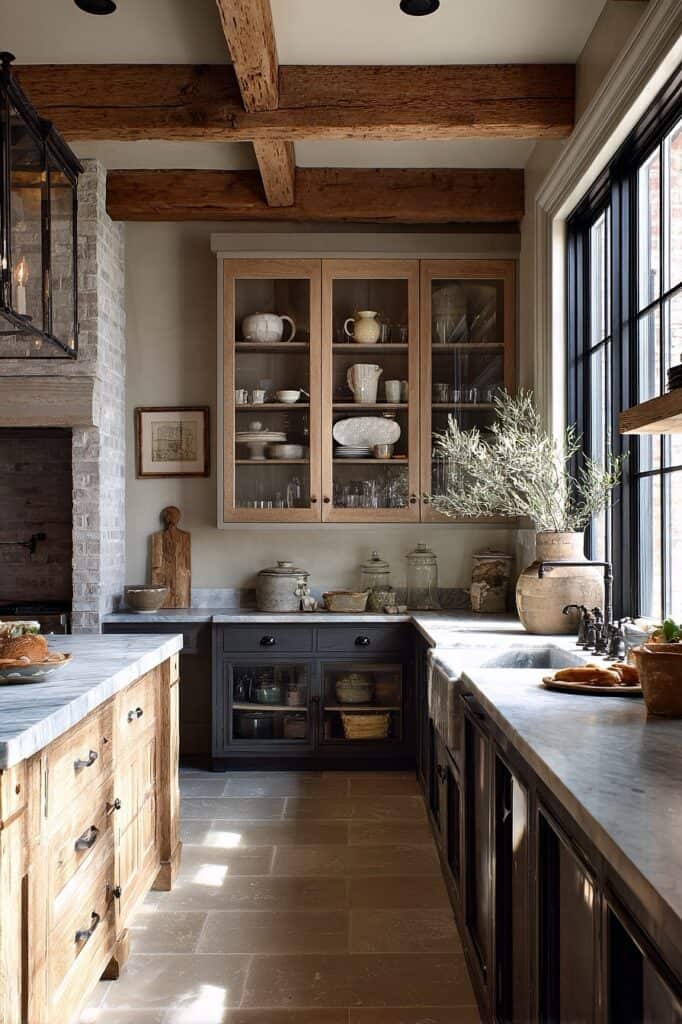
A stack of matte black plates or a collection of amber glass jars on a shelf adds subtle visual interest that keeps the eye moving. It’s these tactile details that make a dramatic space feel approachable and deeply comfortable.
Going dark in the kitchen isn’t about making a space feel small or gloomy; it’s about creating an environment that feels rich, established, and incredibly cozy. By layering deep tones with warm metals and personal textures, you can build a kitchen that feels less like a workspace and more like a retreat. I warn you, though—once you experience the cozy embrace of a moody kitchen, you might never want to go back to white again.