I’m going to be honest with you—hosting Easter brunch can be a nightmare wrapped in a pastel bow. The pressure to produce a ham that isn’t dry, while simultaneously ensuring your house looks like a page out of a catalogue, is enough to make anyone want to hide in the pantry with a bag of Cadbury Mini Eggs. I warn you now: if you think throwing a few plastic eggs on a table constitutes “decorating,” we need to have a serious talk.
But here’s the thing. Creating a tablescape that makes your guests gasp (in a good way) doesn’t have to be torture. In fact, it can be the one part of the day you actually enjoy. I’ve scoured the depths of design trends to bring you ten ideas that range from the sweetly traditional to the shockingly modern. Whether you want to channel your inner whimsical gardener or a stark minimalist architect, there is something here for you.
So, put down the panic button and pick up a glue gun. Let’s dive into ten Easter tablescape ideas that are actually worth your time.
1. The “Moody Spring” Awakening
I know what you’re thinking. “Dark colors? For Easter? Have you lost your mind?” Get ready for a little shock, because yes, we are going dark. While everyone else is drowning in baby pink and lemon yellow, you can stand out with a tablescape that embraces the drama of early spring storms.
Think deep purples, rich indigos, and forest greens. It’s elegant, it’s unexpected, and frankly, it hides wine spills a lot better than a white tablecloth.
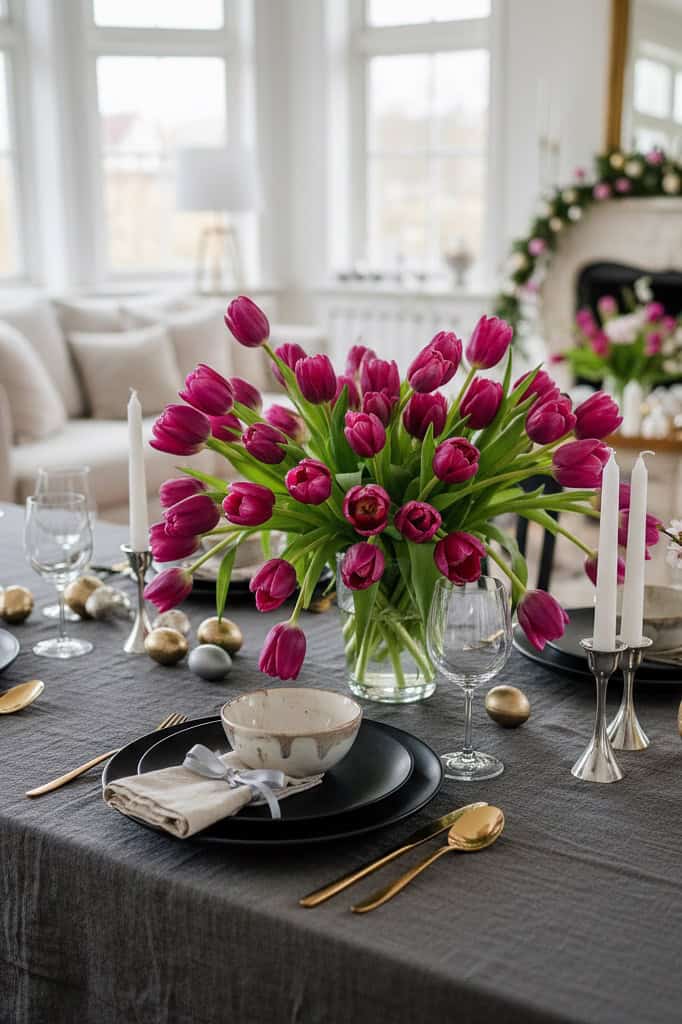
How to pull it off:
Start with a dark charcoal or navy tablecloth. It sounds counterintuitive, I know, but it makes everything you put on top of it pop. Layer on plates in matte black or dark stoneware. The “Spring” element comes in with the flowers. You want vibrant, shocking pops of color—bright magenta tulips or neon yellow daffodils—that look almost electric against the dark background. It’s moody, it’s sexy, and it’s definitely not your grandmother’s Easter lunch.
2. The Deconstructed Garden Party
This is for those of you who want a “nature” vibe but are terrified of it looking messy. The idea here is to bring the outside in, but curating it so it doesn’t look like a lawn mower exploded on your dining table.
I have a personal obsession with moss. It’s cheap, it’s textural, and it smells like rain.
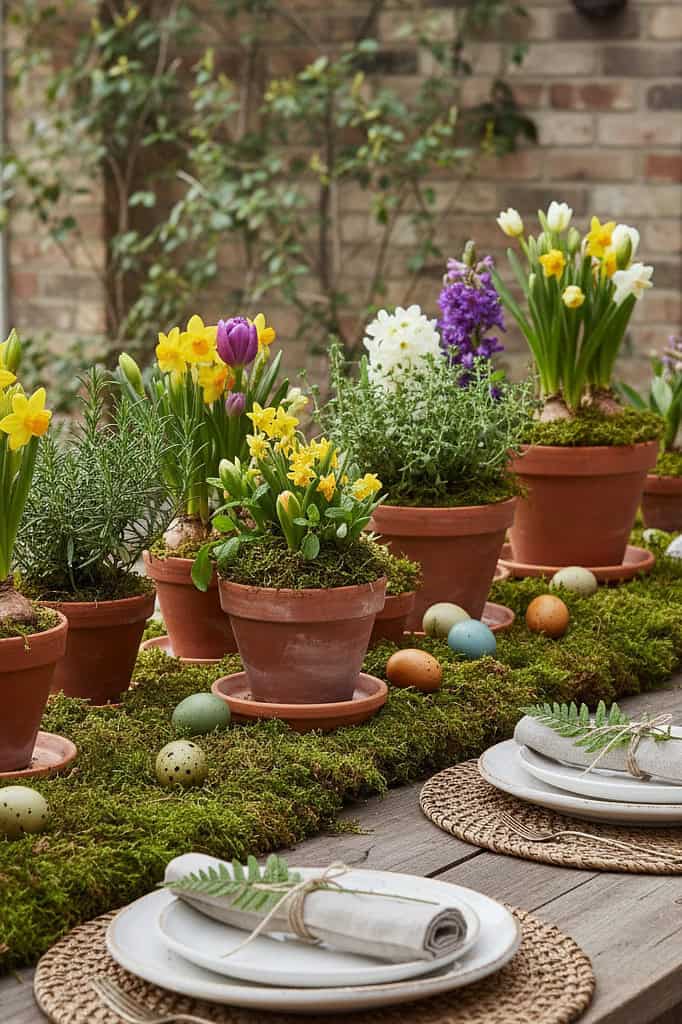
The DIY Tip:
Purchase a roll of preserved moss runner (you can get this online easily). Lay it down the center of your table. Now, nestle terra cotta pots of varying sizes into the moss. Fill them with herbs like rosemary or mint, or small flowering bulbs like muscari. The key is the smell—it hits you before you even sit down. Use twine to tie napkins and maybe tuck a small fern sprig into each setting. It’s tactile and immersive.
3. Nordic Minimalist (Or: The Anti-Clutter)
If the thought of excessive bunnies and chicks makes you break out in hives, this one is for you. The Scandinavian approach to Easter is all about light, wood, and negative space. It’s clean, breathable, and frankly, much easier to clean up afterwards.
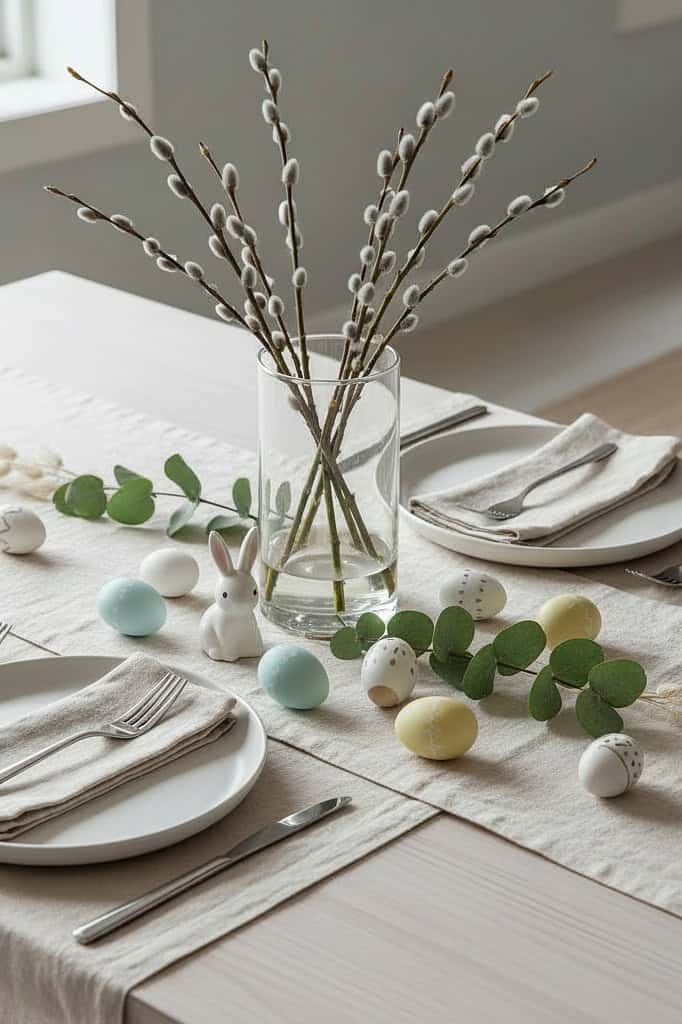
The Aesthetic:
We are talking pale, unfinished woods and a lot of white. Skip the tablecloth entirely and let the wood of your table breathe. If you don’t have a nice wood table, a crisp white linen runner is acceptable.
Style Guide:
Centerpieces should be sparse. A few tall, architectural branches (like pussy willow or cherry blossom) in a clear glass vase or a white ceramic pitcher are all you need. For the place settings, use simple white plates and maybe a wooden egg cup at each seat holding a single, un-dyed brown egg. It’s striking in its simplicity. It says, “I’m effortlessly chic,” even if you’re actually stressed about the roast potatoes.
4. The “Bridgerton” Blue and White
Okay, let’s lean into the romance a little bit. There is something timeless about blue and white chinoiserie that just screams “fancy.” It’s a classic for a reason, people. It feels expensive, even if you thrifted the plates.
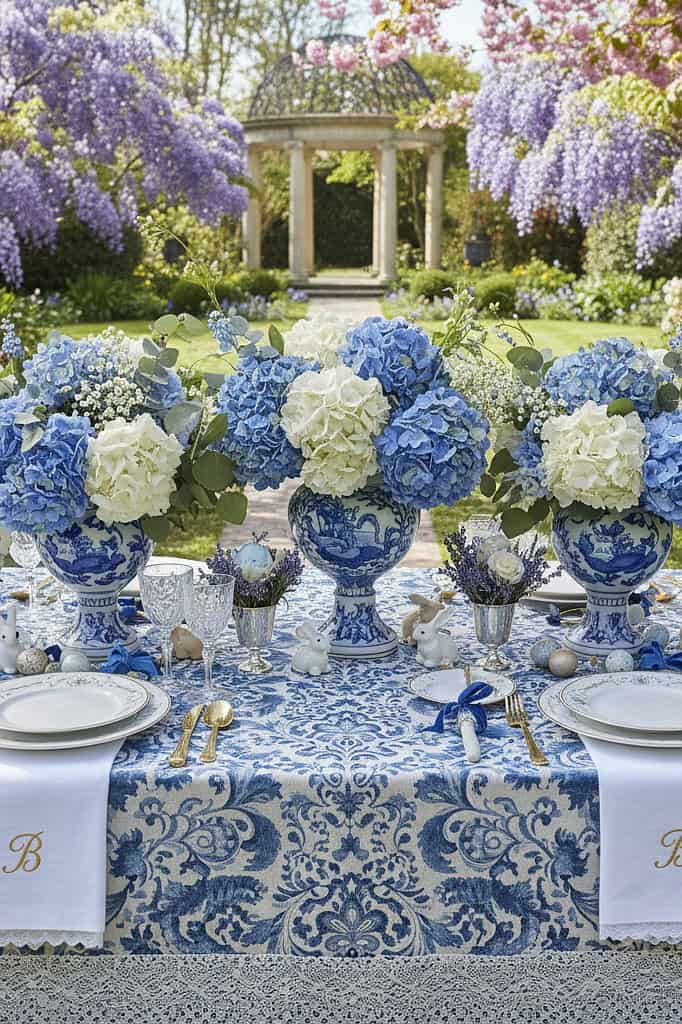
I admit, I’m a sucker for patterns. Mixing patterns is dangerous territory—do it wrong and it looks like a garage sale; do it right and you look like a genius.
How to Mix:
Start with a blue and white patterned tablecloth (toile is a great choice). Then, use solid white plates to give the eye a place to rest. For the centerpiece, you need hydrangeas. Lots of them. White hydrangeas in blue vases, or blue hydrangeas in white vases. The contrast is key. If you want to add an Easter touch without being cheesy, look for ceramic bunnies in that same blue-and-white Delft style. It’s subtle, not screaming “holiday aisle at the dollar store.”
5. Vintage Tea Party Whimsy
This style allows you to embrace the clutter in a charming way. It’s eclectic, colorful, and perfect if you don’t have a matching set of 12 dinner plates (and honestly, who does?).
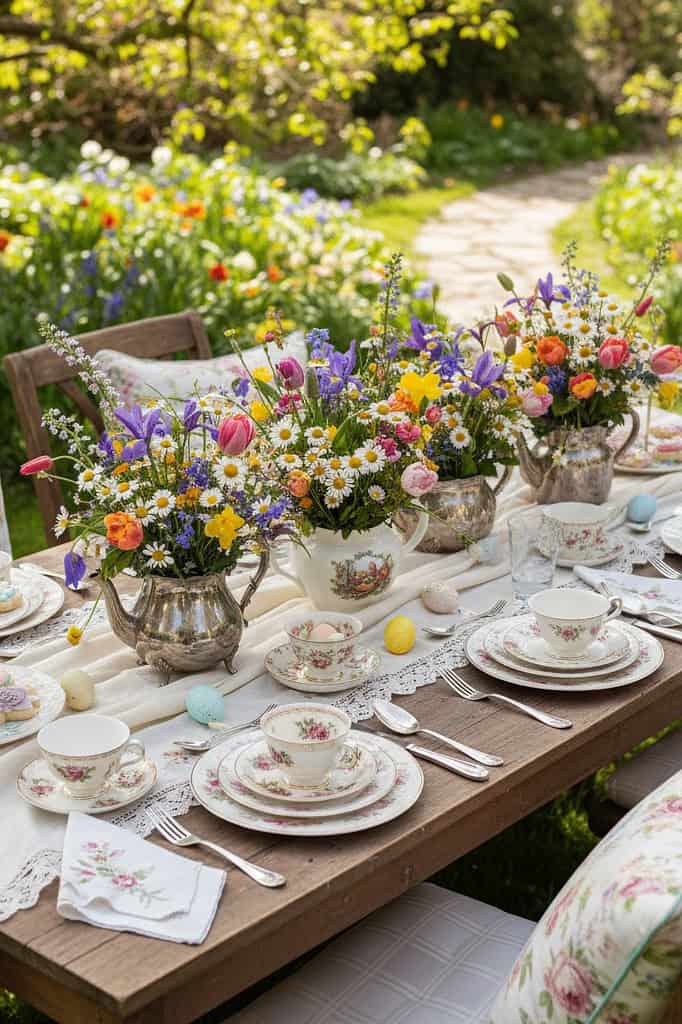
The Strategy:
Go to your cupboard—or your mom’s cupboard—and pull out every floral plate, teacup, and saucer you can find. They don’t need to match; they just need to “go.” The unifying theme here is floral chaos.
Execution:
Stack the plates: a large dinner plate, a smaller salad plate with a different pattern, and a teacup on top. Use vintage silverware if you have it (tarnished is fine, we call it “patina”). For the centerpiece, skip the big vase. Instead, line up a row of teapots and fill them with wildflowers. It feels like Alice in Wonderland crashed your brunch, and I am here for it.
6. The Sophisticated Carrot Patch
I know, I know. Carrots? Really? But stay with me. Orange and green is a vibrant, high-energy color combination that often gets overlooked because people are afraid of looking like a pumpkin patch.
The trick is to use real vegetables, not plastic ones. There is a weird beauty in fresh produce.
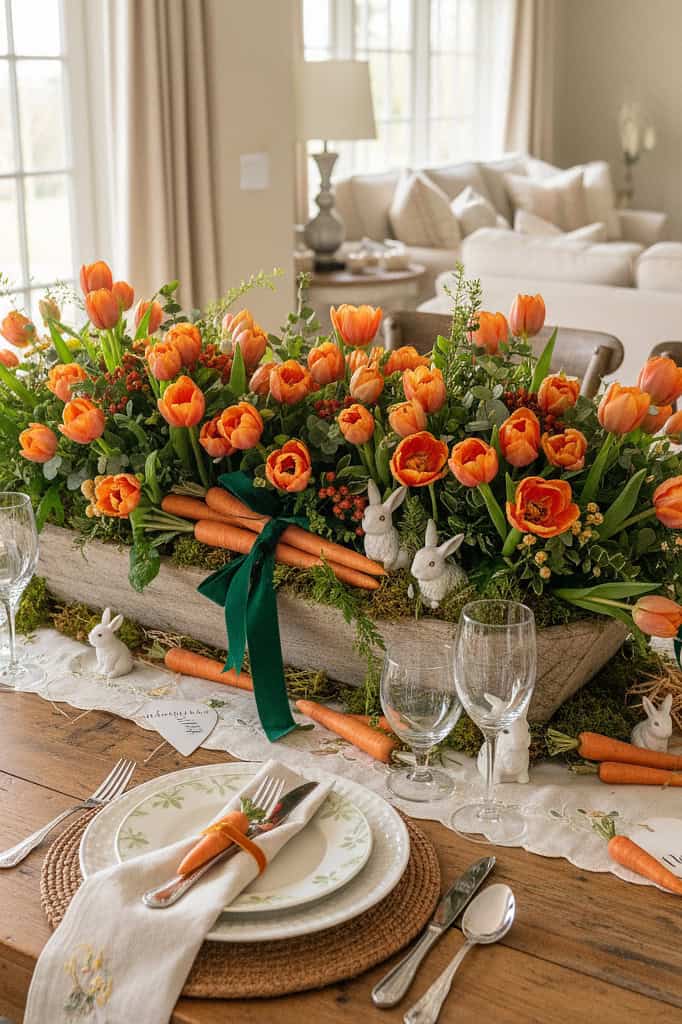
How to do it:
Get yourself some carrots with the leafy green tops still attached. Wash them (obviously), and bundle them together with raffia or a velvet green ribbon. These bundles can sit on top of each place setting. For the centerpiece, use a long wooden trough or board and pile it high with greenery, orange tulips, and more fresh carrots. The bright orange against the fresh green is visually arresting. It’s playful without being childish. Plus, you can make carrot soup the next day. Talk about efficient.
7. The Golden Egg Glamour
Sometimes, you just want to feel rich. I get it. Easter is a celebration, and nothing says celebration like gold. This tablescape is for the host who wears heels in the kitchen.
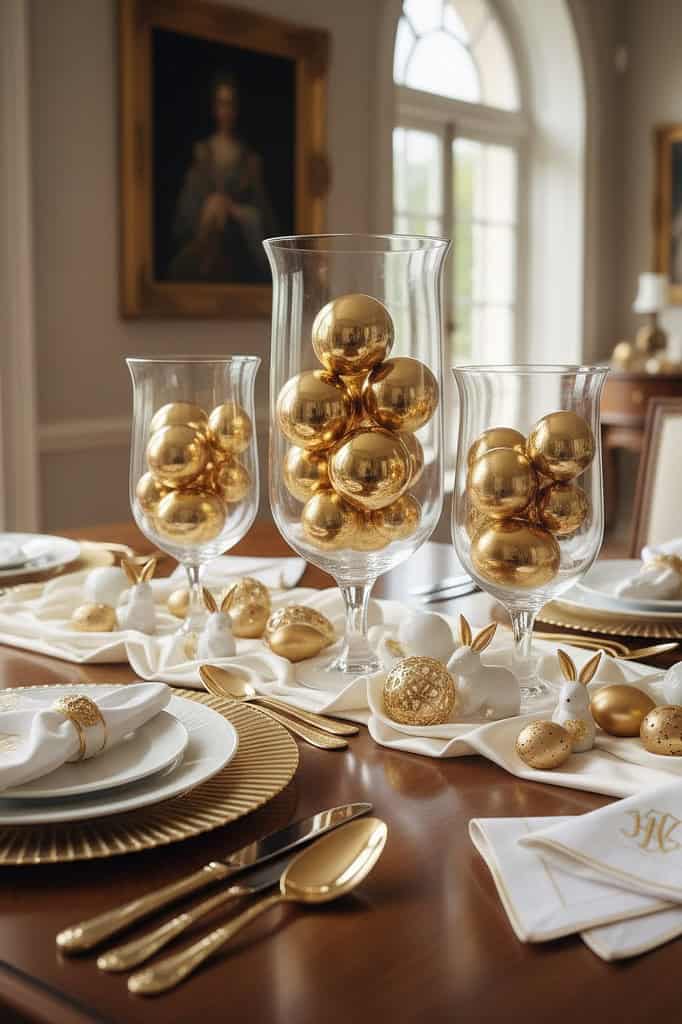
The Palette:
White, cream, and gold. That’s it. No pinks, no blues. Just pure, unadulterated metallic luxury.
The Setup:
Use gold chargers under your white plates. Gold flatware is a must here (if you don’t own any, now is the excuse you needed to buy some). For the centerpiece, buy a few dozen plain craft eggs and spray paint them metallic gold. Fill tall glass hurricane vases with these golden eggs. It’s simple, but under candlelight, it glitters like treasure. It’s a little bit excessive, but isn’t that the point?
8. Rustic Gingham Farmhouse
This is the comfort food of tablescapes. It feels like home. It’s approachable, cozy, and forgiving. If you spill gravy on a gingham tablecloth, it just adds to the charm.
The Key Elements:
You need a buffalo check or gingham runner—sage green or a soft beige works better than bright red (which reads too “picnic”). Pair this with woven placemats, either rattan or water hyacinth.
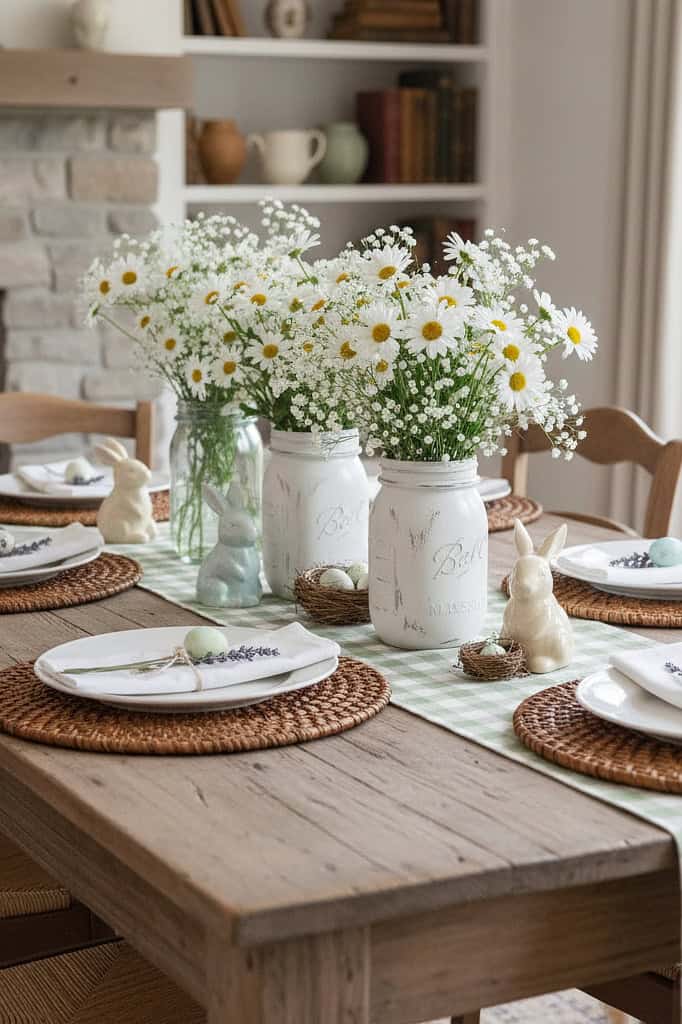
The Centerpiece:
Mason jars. I know, they’ve been done to death, but for this look, they work. Paint them a matte chalky white or a soft pastel blue. Fill them with baby’s breath and daisies. It’s low effort, high reward. To elevate it, use small grapevine wreaths as napkin rings. It’s rustic, tactile, and makes everyone feel relaxed immediately.
9. Monochromatic Pink (The “Millennial” Easter)
Before you roll your eyes at pink, let me clarify: we are not doing bubblegum pink. We are doing “Blush,” “Rose,” and “Dusty Pink.” Layering different shades of a single color is a design hack that makes you look like a professional stylist.
The Technique:
Start with a pale pink linen tablecloth. Add dinner plates in a slightly darker rose hue. Your napkins should be a different shade again, maybe a mauve.
The Floral Factor:
This is where it gets stunning. You need flowers in every shade of pink you can find. Peonies, ranunculus, roses, carnations. Create a gradient down the center of the table, moving from pale blooms to dark ones. It’s visually soothing and incredibly photogenic. It’s feminine, yes, but it’s sophisticated feminine, not “little girl’s birthday party” feminine.
10. The Edible Centerpiece
Let’s be real for a second. The best part of Easter is the candy. Why are we pretending otherwise? Why decorate with inedible plastic when you can decorate with chocolate?
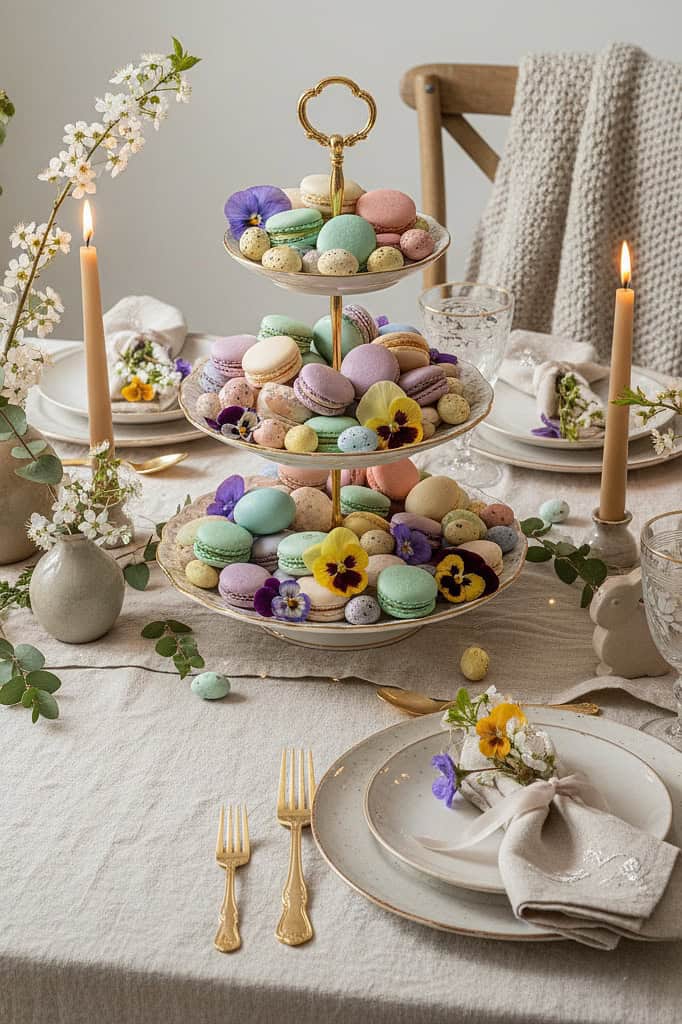
This tablescape is dangerous because your guests might eat the decor before the ham is served, but that’s a risk I’m willing to take.
The Construction:
You need tiered cake stands—glass or porcelain. Stack them high down the center of the table. Fill them with beautifully wrapped chocolate eggs, pastel macarons, sugared almonds, and maybe some gourmet marshmallows. Intersperse the sweets with edible flowers (like pansies or violas) so it still reads as “decor” and not just a candy buffet. It’s indulgent, it’s colorful, and it saves you from having to make a separate dessert.
Wrapping Up
There you have it. Ten ways to dress up your table that won’t make you want to pull your hair out. Whether you decide to go with the moody storm vibes or the explosion of edible sugar, remember that the goal is to create a space where people want to linger.
Don’t stress about perfection. If a flower wilts or a napkin is folded crooked, no one is going to call the decor police. The best tablescapes are the ones that are surrounded by laughter and good food. Now, go forth and glue-gun something fabulous. You’ve got this.